

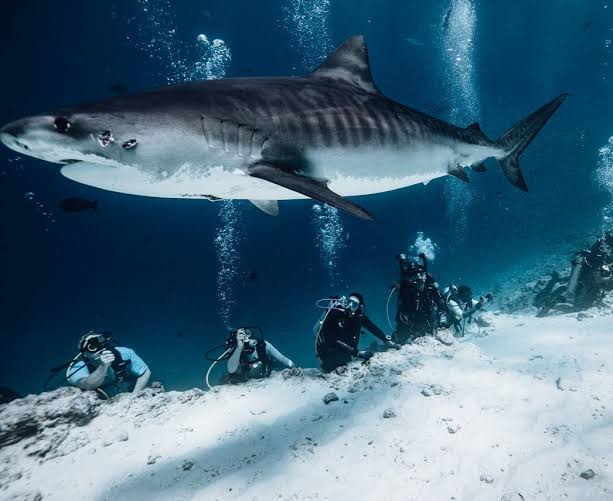
Where the ocean’s most formidable predator becomes the star of an extraordinary underwater sighting.
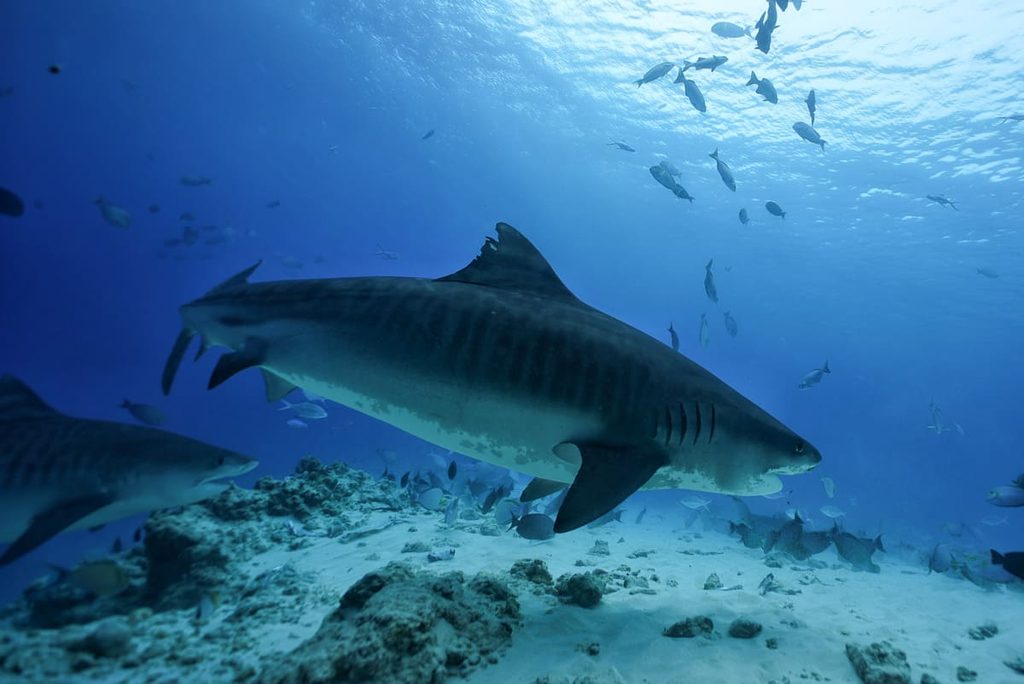
Few encounters in the underwater world can match the breathless, electric moment a tiger shark (Galeocerdo cuvier) materializes from the blue. With its unmistakable vertical stripes, broad, formidable head, and powerful, deliberate movements, it commands a presence unlike any other creature in the sea.
For serious shark divers and marine naturalists, the ultimate quest isn’t just spotting a wandering pelagic. It is finding those rare, sacred corners of the globe where encounters are reliable enough to plan an entire expedition around.
From an environmental, research-driven perspective, this distinction matters deeply. While tiger sharks roam widely across tropical oceans, only a select few destinations boast the unique topography and resident populations that guarantee reliable, year-round encounters backed by marine science.
Four legendary destinations stand out in the global shark-diving conversation—each offering a wildly different window into the world of the apex predator, backed by current research and ecological data.
1. Fuvahmulah Island, Maldives — The World’s Leading Tiger Shark Capital
For divers seeking unmatched consistency, Fuvahmulah occupies a peerless throne. Unlike the classic ring-shaped atolls of the Maldives, Fuvahmulah is a solitary island rising like a sheer mountain out of the deep equatorial channel. This unique isolation acts as a magnet for pelagic marine life.
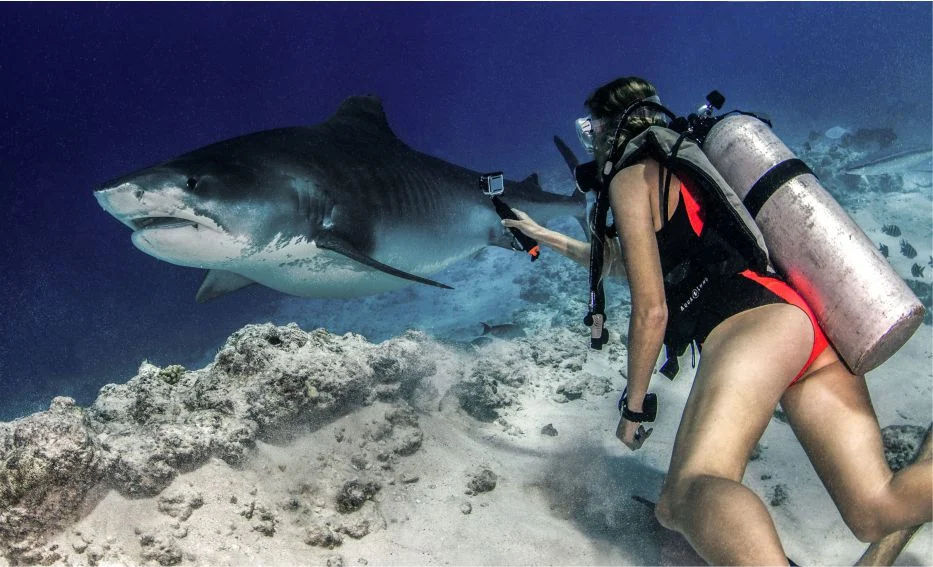
At the heart of the island’s southern edge sits the deep-blue domain where long-term monitoring and scientific research have documented the world’s largest known population of resident tiger sharks. Currently, the scientific database of Fuvahmulah resident tiger sharks stands at around 400 individuals uniquely identified through rigorous photographic identification.
The Scientific Reality
Local researchers note that this documented database is merely the tip of the iceberg, as the vast surrounding deep ocean of the island is not yet fully utilized for scientific sampling. Factoring in unmonitored pelagic zones, field researchers, experienced scuba divers, and veteran fishermen estimate that the true resident tiger shark population actually surges well over 1,000 individuals.
The Experience
Plunging into the crystal-clear, deep blue waters off Fuvahmulah is a cinematic, pulse-pounding sensory awakening. As you descend into the warm, cobalt-blue Indian Ocean, you are instantly enveloped by a pristine wilderness where massive female tiger sharks—some stretching over 4 metres long—glide with effortless, hypnotic grace.
Island-Wide Sightings
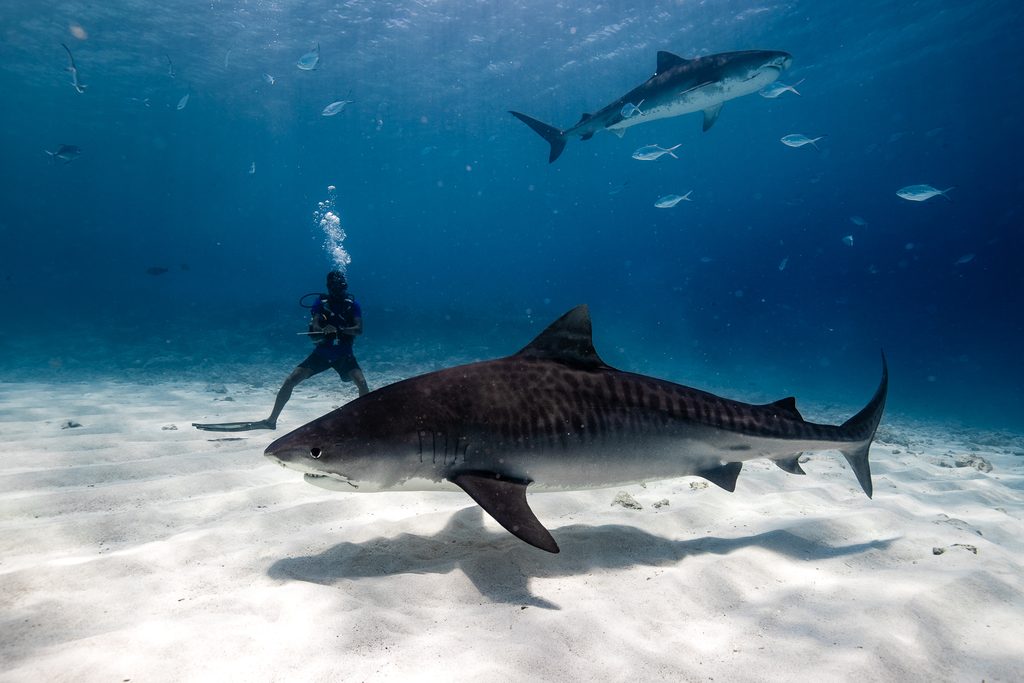
Unlike destinations restricted to a single localized spot, tiger shark sightings in Fuvahmulah happen all around the island as these magnificent predators cruise the dramatic drop-offs and currents encircling our shores.
The Tiger Harbour
Situated just meters away from the bustling entrance of the island’s main harbor, The Tiger Harbour is a world unto itself. Geographically, this site features a shallow sandy plateau that shelves dramatically into the deep equatorial abyss, creating a unique mixing zone of upwelling currents rich in nutrients and marine activity.
Ecology & Bathymetry: The bathymetry consists of a flat, sunlit sandy bottom sweeping up against the harbor mouth, acting as a natural waiting room and staging ground for resident tiger sharks.
The Cinematic Experience: Dropping into Tiger Harbour feels like stepping onto a wild, untamed stage. As you kneel on the pristine white sand, huge female tiger sharks materialize effortlessly from the cobalt haze, gliding past with a tranquil curiosity.
Voices from the Field:
“Dropping down right outside the harbor wall and instantly locking eyes with five massive tiger sharks within seconds is something no other place on earth can replicate.” — Global Shark Expedition Diver
“From a research standpoint, Tiger Harbour provides an unprecedented window into female-dominant resident site fidelity. The predictability here is a scientist’s dream.” — Fuvahmulah Marine Researcher
The Tiger Wall
Ecology & Bathymetry: Characterized by a sheer, living coral wall that plummets straight down into the midnight-blue depths of the Indian Ocean, Tiger Wall is sculpted by oceanic currents that sweep clean, crystal-clear water across its ledges.
The Cinematic Experience: Hovering along the edge of Tiger Wall is a vertigo-inducing, cinematic thrill. Stealthy silhouettes emerge from the deep vertical drop, cruising effortlessly up the wall with the current in an adrenaline-fueled ballet of light and shadow.
Safety, Research Insights, and Shark Diversity
Fuvahmulah stands apart as a benchmark destination for safety. The resident tiger sharks here are notably placid, non-aggressive, and paired with a spotless safety record of zero dive incidents.
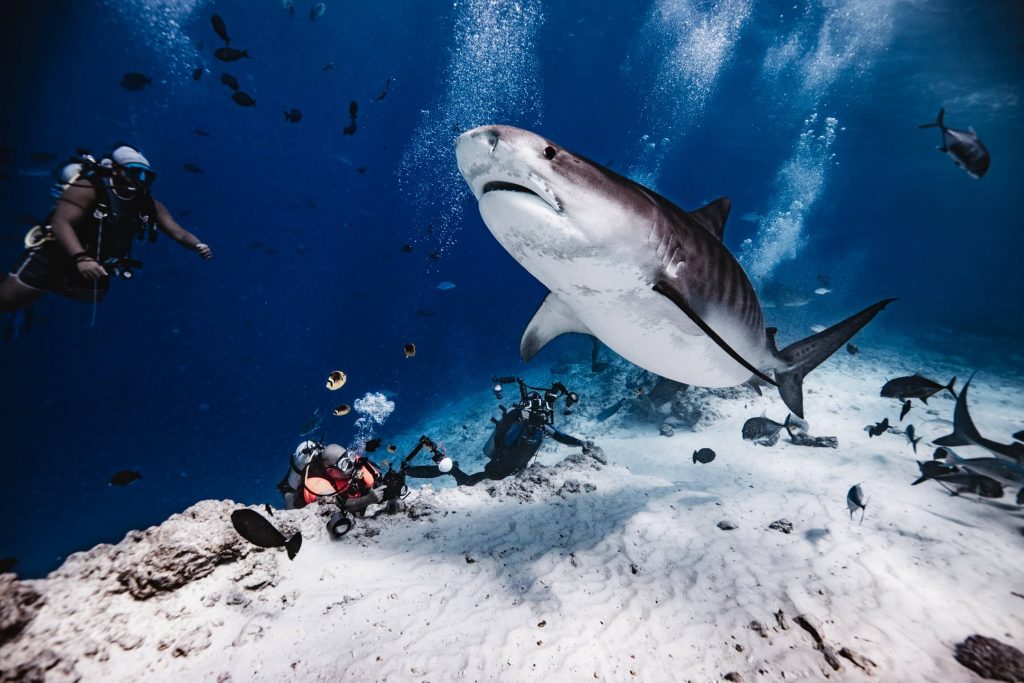
Earning its global reputation as the ultimate “Shark Island,” Fuvahmulah is celebrated for offering common sightings of ten distinct shark species within its rich pelagic ecosystem:
- Tiger Sharks (Galeocerdo cuvier)
- Pelagic Thresher Sharks (Alopias pelagicus)
- Scalloped Hammerhead Sharks (Sphyrna lewini)
- Whale Sharks (Rhincodon typus)
- Grey Reef Sharks (Carcharhinus amblyrhynchos)
- White-tip Reef Sharks (Triaenodon obesus)
- Silvertip Sharks (Carcharhinus albimarginatus)
- Oceanic Whitetip Sharks (Carcharhinus longimanus)
- Silky Sharks (Carcharhinus falciformis)
- Blacktip Reef Sharks (Carcharhinus melanopterus)
The Verdict and Bonus Marine Life
Recent traveler reviews on TripAdvisor echo what researchers already know: it is not uncommon to encounter upwards of 10 to 20 individual tiger sharks on a single dive, complemented by an unmatched variety of other pelagics.
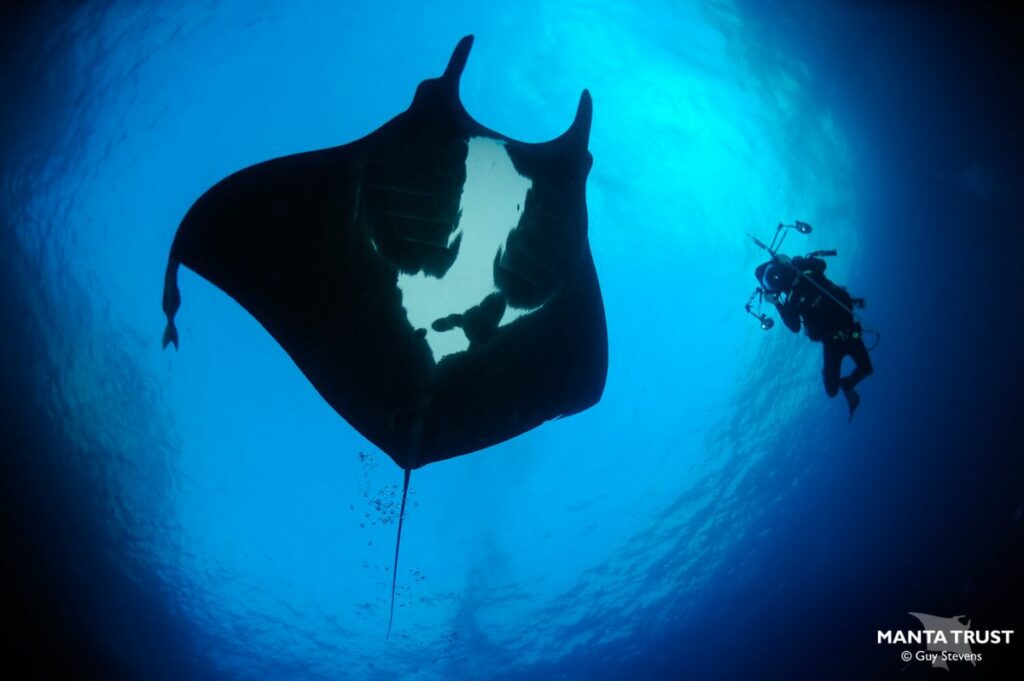
Bonus Marine Life: Oceanic manta rays, pilot whales, and schooling tuna.
Dive Centers: Dive centers in Fuvahmulah offer world-class, high-quality dive equipment and employ highly qualified, well-trained local and international dive guides. Safety is never compromised on Fuvahmulah island.
2. Tiger Beach (Grand Bahama Island), Bahamas — The Atlantic’s Iconic Shallow Arena
Located roughly 20 miles off the coast of West End, Grand Bahama, this site is internationally celebrated for crystal-clear turquoise waters and dramatic, up-close encounters.
The Experience
Divers settle comfortably onto a shallow, sun-drenched sandy flat (8 to 10 metres deep) while a shifting cast of large female tiger sharks—some measuring over 4.5 metres—cruise effortlessly between them.
Why Year-Round
While peak season runs through the cooler winter months, consistent operator presence and provisioning allow for reliable encounters almost year-round. Recent guest logs highlight magical encounters pairing tiger sharks with great hammerheads, lemon sharks, and Caribbean reef sharks.
The Research Caveat
Field studies in the Bahamas have long utilized acoustic telemetry to track home ranges, demonstrating that while tiger sharks show high site fidelity to Bahamian banks, regional movements are heavily influenced by seasonal water temperature shifts.
3. Oahu, Hawaii, USA — Open-Ocean Encounters with Island Residents
Hawaii offers an entirely different flavor of shark diving, rooted deep in Native Hawaiian culture where the tiger shark (manō kalama‘o) is revered as an ancestral guardian (‘aumākua).
Rather than gathering at a fixed provisioning site, Hawaii’s tiger sharks belong to a robust, healthy regional population with distinct home ranges. Telemetry and satellite tracking studies have revealed that while some sharks travel extensively between the main Hawaiian islands, others display strict, year-round residency around Oahu and Maui.
The Experience
Operating off the south and west shores of Oahu, specialized local dive operators conduct cage-free, open-ocean pelagic dives. You step off the boat into the deep blue Pacific, where tiger sharks frequently surface from the depths to investigate.
Bonus Marine Life
Sandbar sharks, playful spinner dolphins, and migrating humpback whales during the winter months.
4. Beqa Lagoon, Fiji — Multi-Species Shark Theatre
Fiji’s Shark Reef Marine Reserve in Beqa Lagoon is globally famous for pioneering managed, multi-species shark feeding dives that directly fund local conservation and community villages.
The Experience
While massive bull sharks and silvertips typically steal the show here by descending in the dozens, tiger sharks make regular, awe-inspiring appearances along the reef.
Why Year-Round
Fiji’s warm tropical waters and protected marine reserves maintain high ecological activity across all four seasons, backed by rigorous marine park management that supports stable apex predator populations.
Essential Research and Diving Tips
Certification Requirements
Because these dives frequently occur in open water or require strict positional discipline, most reputable operators require an Advanced Open Water certification alongside a solid foundation of logged dives (typically 30+).
Mastering Etiquette
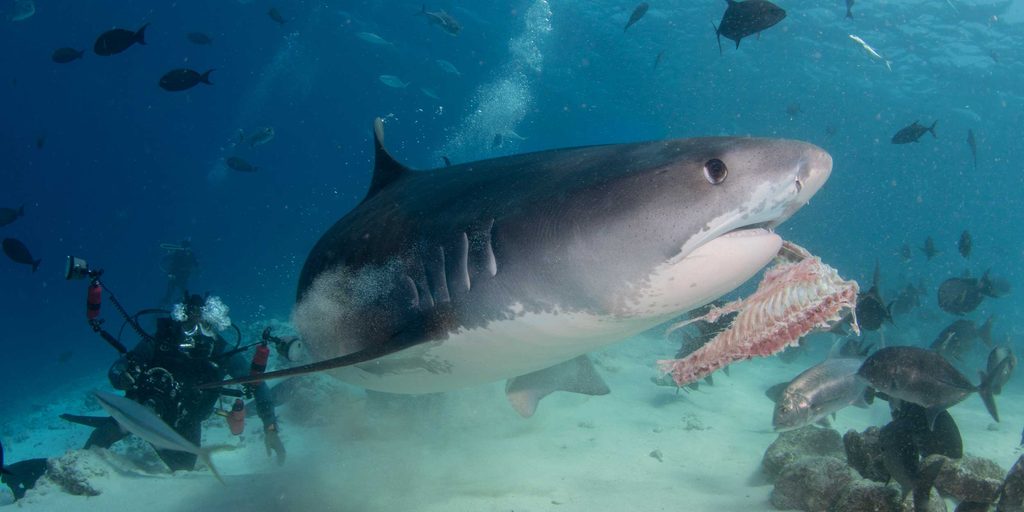
Tiger sharks are apex predators driven by curiosity and instinct. Respecting the dive masters’ instructions—maintaining your position flat on the bottom, avoiding erratic movements, and keeping a vigilant 360-degree awareness—ensures a safe harmony between diver and animal.
Final Thoughts: Choosing Your Expedition
Whether you are drawn to the pristine, untamed pelagic theater of Fuvahmulah, the sunlit, cinematic flats of Tiger Beach, the wild open blue of Hawaii, or the multi-species majesty of Fiji, diving with tiger sharks changes you. It strips away misconceptions, replacing fear with profound respect. And somewhere down there in the current, beneath the rolling waves, the timeless stripes keep appearing.
Have you ever locked eyes with a tiger shark underwater, or is it still sitting proudly at the very top of your bucket list?
Leave a Reply