
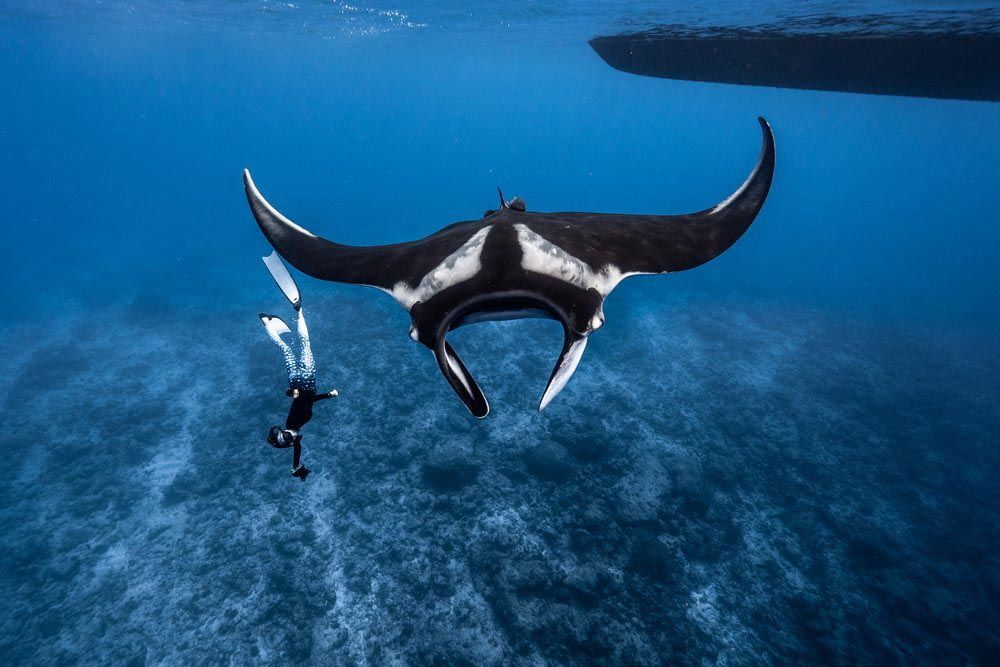
20 Questions About One of the Indian Ocean’s Great Marine Mysteries
Author: Shaffaaf Naseer, Environmentalist
Introduction: Wonderfully Unique Oceanic Mantas of Fuvahmulah
There are places in the Maldives where reef manta rays are famous for feeding. There are others where reef mantas arrive seasonally at cleaning stations. Fuvahmulah is different.
Fuvahmulah Atoll in the southern Maldives hosts one of the largest known aggregations of endangered Oceanic Manta Ray (Mobula birostris) in the world.
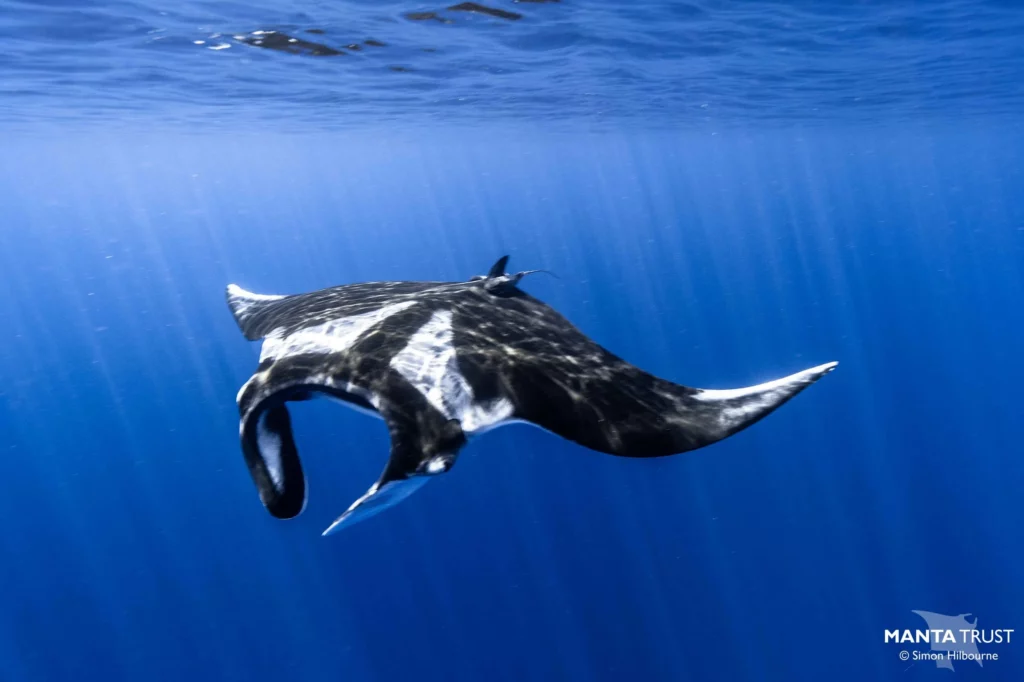
Here, in the deep ocean surrounding one extraordinary island, an endangered giant of the open sea appears in remarkable numbers for a short period each year.
The animal is the oceanic manta ray (Mobula birostris), the largest of the manta rays. Unlike the reef manta (Mobula alfredi), which is widespread across the Maldivian atolls.
The Island on the Equator
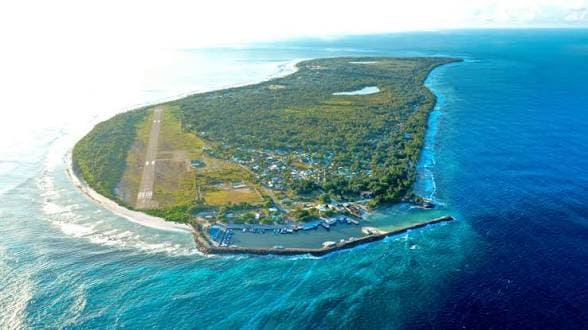
Oceanic manta rays are regularly encountered in the Fuvahmulah “Wonderfully Unique”. Specifically around the ocean of this truly unique island rising from the deep ocean right in the Equatorial Channel. Literally known as the “Zero Degree Island,” Fuvahmulah towers from the deep sea at coordinates 0^\circ 17′ 45” S (latitude -0.298^\circ) and 73^\circ 25′ 34” E (longitude 73.424^\circ).
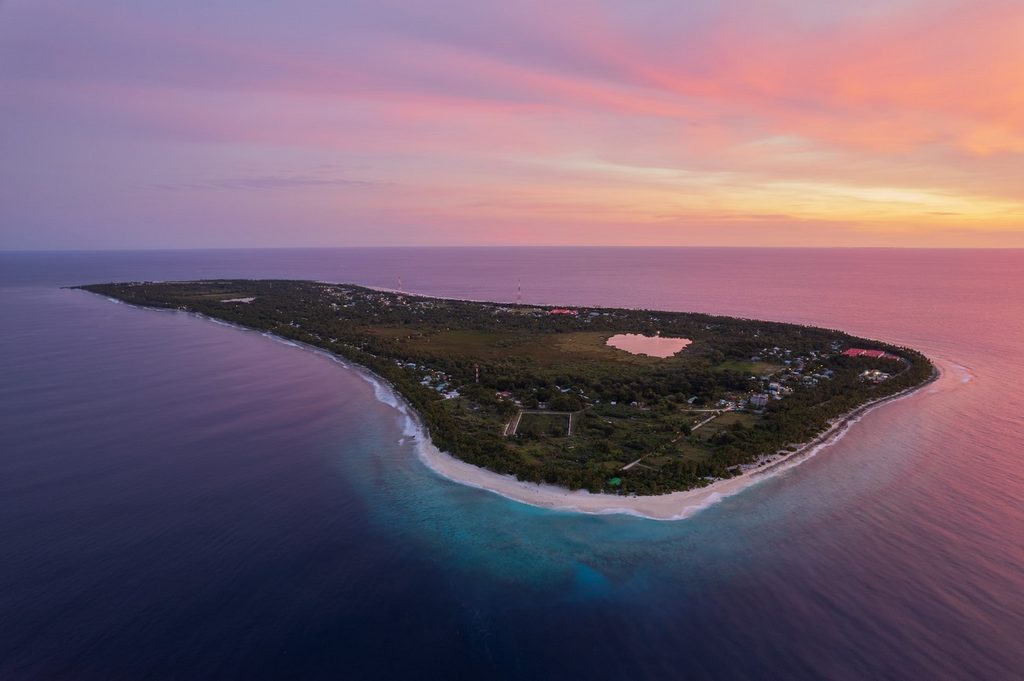
Located in the far southern part of the archipelago, the Equatorial Channel—known locally as Mulah Kandu—positions the Equator directly between South Huvadhu Atoll (Gaafu Dhaalu) and Fuvahmulah.
The giant oceanic manta ray, Mobula birostris, is one of the most spectacular animals you can encounter while diving and freediving. With its enormous wingspan, graceful movements and remarkable intelligence, this gentle giant has fascinated divers and marine biologists around the world.
The Giant Oceanic Manta Ray: A Giant of the Open Ocean
The giant oceanic manta ray (Mobula birostris) is one of the most spectacular animals encountered by divers and freedivers. With its enormous disc, graceful movements, extraordinary intelligence and highly developed social behaviour, this gentle giant has fascinated marine biologists, divers and ocean lovers around the world.
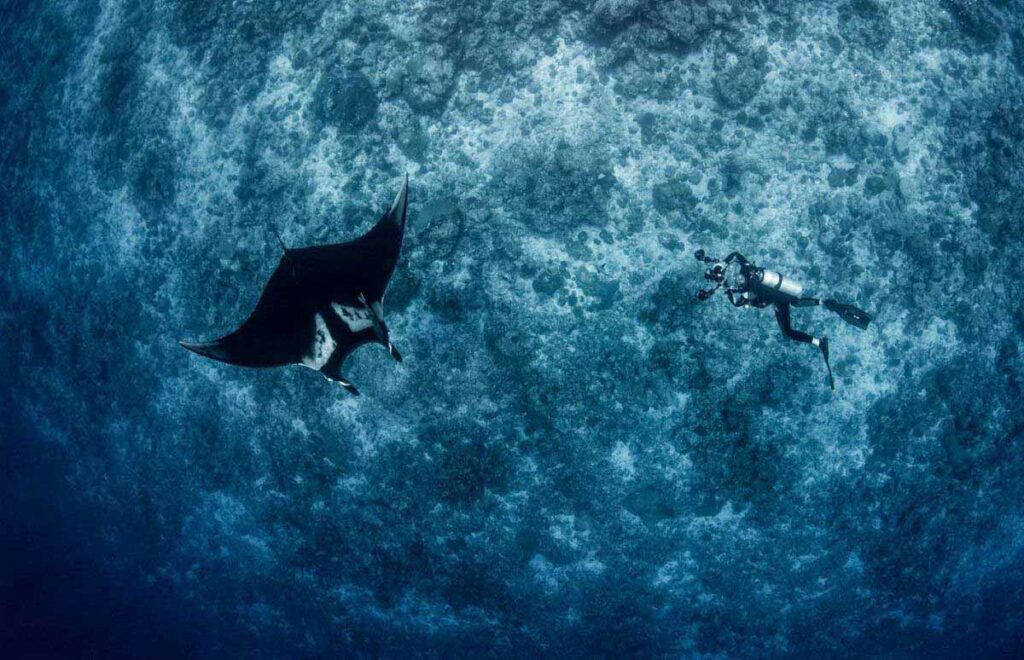
The giant oceanic manta truly lives up to its name. It is the largest species of ray in the world and among the largest fish in the ocean. The species can reach a remarkable maximum recorded disc width of around 29 feet (8.8–9 metres), making an exceptionally large individual wider than a small private aircraft.
Most mature oceanic mantas, however, are considerably smaller than this maximum. Adult individuals commonly measure approximately 15–23 feet (4.5–7 metres) across the disc. Their bodies are relatively short compared with their enormous width, although the total body length can approach 15–30 feet (4.5–9 metres), depending on how length is measured.
Large individuals can weigh several thousand kilograms, with exceptional specimens reported at more than 5,300–6,600 pounds (2,400–3,000 kg).
Giant Oceanic Manta Ray at a Glance
Their enormous size is only part of what makes oceanic manta rays extraordinary.
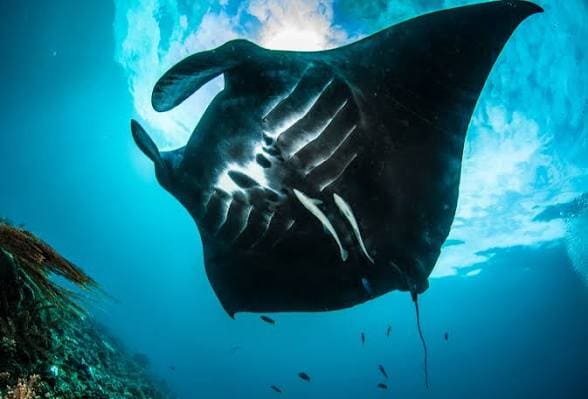
They are highly mobile pelagic animals that can travel considerable distances through the open ocean. They are also known for their intelligence, complex social interactions and remarkable ability to navigate productive feeding and cleaning areas.
- Scientific name: Mobula birostris
- Maximum recorded disc width: Approximately 29 feet (8.8–9 metres)
- Typical adult disc width: Approximately 15–23 feet (4.5–7 metres)
- Maximum reported total length: Up to approximately 30 feet (9 metres)
- Weight of large adults: Several thousand kilograms, with exceptional individuals exceeding 3,000 kg
- Closest commonly encountered relative: Reef manta ray (Mobula alfredi)
- Distinguishing feature: An enormous body disc with distinctive cephalic fins extending from either side of the head
Fuvahmulah: Where Oceanic Mantas Gather in Extraordinary Numbers
A peer-reviewed study analysing oceanic manta records from the Maldives found that 642 of 729 recorded sightings—88 percent—occurred at Fuvahmulah, with 91 percent of those sightings recorded during March and April. These figures underline just how exceptional Fuvahmulah is for encounters with oceanic mantas.
For me, this is one of Fuvahmulah’s most wonderfully unique experiences. I was born and raised on this island, and I have made it my mission to help protect this paradise—a truly one-of-a-kind island with no real equivalent elsewhere in the world.
The Maldives Manta Conservation Programme notes that the population appears to be highly transient, while the factors driving the remarkable spring aggregation—and where these mantas go when they leave Fuvahmulah—remain poorly understood.
That makes the Fuvahmulah manta story much more than a tourism story. It is a story of courtship, migration, oceanography and conservation, intertwined with a fascinating scientific mystery that researchers are still working to understand.
Having grown up on Fuvahmulah, I believe this perspective is important when considering what makes the island special. Fuvahmulah is not simply another destination within the Maldives. Its unique geographical position and oceanographic conditions create marine experiences that are genuinely different from those found elsewhere in the country.
And among the most extraordinary of these experiences is the annual arrival of oceanic manta rays. Scientists have already learned a great deal about these remarkable animals.
More than 1,000 individual oceanic mantas have been identified in Maldivian waters, with the majority of identified individuals recorded around Fuvahmulah.
Yet despite this growing body of knowledge, many questions remain unanswered. Each manta season at Fuvahmulah therefore offers not only an extraordinary experience for divers, but also a valuable opportunity for local conservationists like me, as well as Maldivian and international marine biologists and scientists, to deepen our understanding of one of the ocean’s most remarkable giants.
Fuvahmulah; Wonderfully Unique Oceanic Mantas FAQs
1. When is the Fuvahmulah oceanic manta season?
The strongest documented period is March and April, around the transition between the northeast and southwest monsoons. Oceanic mantas can be encountered outside this period, but the seasonal concentration around Fuvahmulah is particularly pronounced during these months. For travellers specifically interested in oceanic mantas, this seasonal window is especially significant.
2. Why does Fuvahmulah have such unusual marine life?
Fuvahmulah’s geography is fundamentally different from the classic Maldivian atoll landscape. UNESCO describes Fuvahmulah as the Maldives’ only single-island administrative atoll. Unlike most Maldivian islands, it does not have a broad lagoon separating the island from the outer ocean. Its isolated, oceanic setting helps explain why it is such a remarkable destination for large pelagic animals.
3. Why do oceanic mantas come to Fuvahmulah?
We do not yet know the complete answer. Researchers have identified the seasonal pattern, but the precise environmental and biological drivers of the aggregation remain unresolved. Possible factors include seasonal oceanographic conditions, prey availability and reproductive behaviour, but these should not be presented as proven explanations. The mystery remains part of what makes the phenomenon so fascinating.
4. Do the mantas come to Fuvahmulah to mate?
There is strong scientific evidence that oceanic manta rays participate in elaborate courtship and mating behaviour in the Maldives. A 14-year study documented the sequence of manta courtship, including initiation, pursuit, evasion, pre-copulatory positioning, copulation, post-copulatory holding and separation.
However, it is scientifically safer to say that courtship and mating behaviour has been documented among Fuvahmulah, Maldives oceanic mantas than to claim that all oceanic mantas come to Fuvahmulah specifically to mate.
5. What is a “Manta Train”?
A manta train is a spectacular courtship formation in which one manta—usually a female—is pursued by one or more males.
The animals can move through the blue in a graceful procession.
Scientific research has demonstrated that manta courtship is considerably more complex than the casual observer might imagine, identifying seven distinct stages of courtship and mating.
6. Is Fuvahmulah home to the world’s largest oceanic manta population?
This requires an important distinction. The Maldives has the third-largest recorded population of oceanic manta rays in the world, according to the Maldives Manta Conservation Programme, with more than 1,000 individual oceanic mantas identified in Maldivian waters.
Most of these records come from Fuvahmulah. That does not establish that Fuvahmulah itself has the world’s largest oceanic manta population. A more defensible description is that Fuvahmulah is one of the world’s most important known aggregation locations for oceanic manta rays.
7. How many individual oceanic mantas have been identified in the Maldives?
How The Maldives Manta Conservation Programme reports more than 1,000 identified individual oceanic manta rays in its database, with most recorded around Fuvahmulah.
These records have been built through scientific fieldwork, photographic identification, citizen-science contributions and cooperation with local dive centres.
Individual mantas can often be recognised from distinctive ventral markings.
8. Are Fuvahmulah’s oceanic mantas resident animals?
Apparently not.
Research indicates that the oceanic manta population around Fuvahmulah is highly transient. Individuals are rarely re-sighted compared with the more resident patterns observed in Maldivian reef manta populations.
Fuvahmulah may therefore be better understood as a seasonal meeting place in a much larger oceanic journey.
9. Where do the mantas go after leaving Fuvahmulah?
This is one of the greatest unanswered questions.
Researchers do not yet know the full migration routes of Fuvahmulah’s oceanic mantas.
The Maldives Manta Conservation Programme identifies the animals’ movements outside the seasonal aggregation as an important knowledge gap.
Whether individuals travel toward Sri Lanka, farther east or west across the Indian Ocean, or into other ocean basins requires evidence from tagging, genetics and long-term identification.
10. Could Fuvahmulah’s mantas be connected to Sri Lankan populations?
It is possible, but the connection has not been established.
Sri Lanka is geographically close to the Maldives and supports significant fisheries for mobulid rays.
The Maldives Manta Conservation Programme identifies this proximity as a conservation concern while noting that the extent of connectivity between the populations is currently unknown.
11. Are Oceanic Mantas endangered?
Yes. The IUCN Red List classifies the oceanic manta ray as Endangered, with a decreasing global population trend.
Fishing is a major threat to the species. Because oceanic mantas are highly mobile, conservation cannot stop at national borders.
12. Why are manta and devil rays being caught and landed in Sri Lanka?
The situation in Sri Lanka is complex and is largely connected to fisheries bycatch and the commercial value of mobulid-ray gill plates, rather than a simple case of all fishers deliberately targeting oceanic mantas.
Research has documented mobulid-ray bycatch in Sri Lankan fisheries, including animals becoming entangled in gillnets and other fishing gear and subsequently being retained and landed.
Gill plates have commercial value in an international trade, including markets where they are promoted for purported medicinal uses that lack established scientific evidence.
This is particularly concerning because mobulid rays have slow reproductive rates and fishing pressure can have serious population consequences.
13. What happens to mantas outside Maldivian waters?
A oceanic manta protected around Fuvahmulah may eventually travel into waters where it encounters very different fishing pressures.
Oceanic mantas can become entangled or captured as bycatch in fishing gear, while some mobulid fisheries deliberately target rays.
The Maldives has taken strong domestic measures: all ray species are protected under Maldivian law, and capturing, keeping or harming protected rays is prohibited. But a highly migratory animal does not remain within one country’s jurisdiction.
14. Does Fuvahmulah protect its oceanic mantas?
Fuvahmulah benefits from Maldives-wide legal protection for rays, while research and conservation programmes have developed specifically around the island’s oceanic manta aggregation.
The Maldives Oceanic Manta Ray Project in Fuvahmulah was established in 2018, combining research and marine education during the short manta season. Local dive operators, guides, photographers and residents also contribute valuable observations and photographic records.
15. How big can oceanic manta rays get, and how large are the mantas encountered in Fuvahmulah?
Oceanic manta rays are enormous animals—the largest living rays and among the largest fish in the ocean. The Manta Trust gives an average disc width of approximately 4–5 metres, with exceptionally large individuals reaching about 6.8 metres, and reports weights of up to roughly 2,000 kilograms.
The IUCN Red List gives a maximum reliably documented disc width of about 7 metres. There is not yet a sufficiently comprehensive published dataset to say that Fuvahmulah consistently receives the world’s largest individuals.
However, the 2022 Fuvahmulah survey assessed all observed individuals as adults, and one pregnant female was recorded; 33% of observed females showed visible mating scars or wounds.
16. Are Fuvahmulah’s mantas feeding, cleaning or mating?
They can display several behaviours, but cruising is particularly common in the available records.
One major study recorded oceanic mantas cruising in 94% of sightings, compared with smaller proportions involving feeding, cleaning and courtship.
At Farikede in Fuvahmulah, the Maldives Manta Conservation Programme reports that oceanic mantas pass through for only a few weeks each year and that no feeding or cleaning has been observed there, suggesting migration through the area.
17. Are oceanic mantas dangerous to divers?
No.
Oceanic manta rays are filter feeders and are not predators of humans.
Their enormous size can be intimidating when one approaches a diver, but they are generally peaceful. Divers should nevertheless maintain appropriate distance, avoid touching or chasing them, and allow the animals to control the encounter.
Responsible wildlife tourism is particularly important when dealing with an endangered, highly mobile species.
18. Can divers see oceanic mantas in Fuvahmulah?
Yes. Oceanic manta encounters are an important part of Fuvahmulah’s diving experience, particularly during the seasonal peak. But they are wild animals, not guaranteed attractions.
A dive may produce an unforgettable encounter with a single enormous manta, several animals cruising through the blue, or spectacular courtship activity.
On another day, the mantas may simply not appear. That unpredictability is what makes a genuine wildlife encounter different from a staged attraction.
19. What does science still need to discover about Fuvahmulah’s mantas?
A great deal.
Among the most important unanswered questions are where the mantas go after the season, which individuals return, whether the Maldivian and Sri Lankan populations are connected, what environmental conditions trigger the annual aggregation, what proportion of animals use Fuvahmulah for reproductive activity, where females give birth, how far individuals travel, and whether there are connections with oceanic manta populations elsewhere in the Indian Ocean.
Answering these questions will require long-term photographic identification, genetic research, satellite tagging and international cooperation.
20. Why does protecting Fuvahmulah’s oceanic mantas matter internationally?
Because Fuvahmulah may be only one chapter in the life of an animal that crosses an entire ocean.
Protecting the aggregation around Fuvahmulah is essential, but it cannot guarantee the survival of the animals after they leave Maldivian waters. The conservation challenge therefore extends beyond Fuvahmulah, beyond the Maldives and beyond individual national jurisdictions.
International cooperation between the Maldives, Sri Lanka and other Indian Ocean states could become increasingly important as researchers learn more about the animals’ movements.
A Remarkable Research Clue: The Mantas We Have Not Yet Seen
The 2022 Maldivian Oceanic Manta Ray Project provides another fascinating clue. During the 2022 peak period, researchers identified 44 previously unrecorded oceanic mantas around Fuvahmulah.
Only two were re-sighted during the survey period, and none had been recorded in the database before that season.
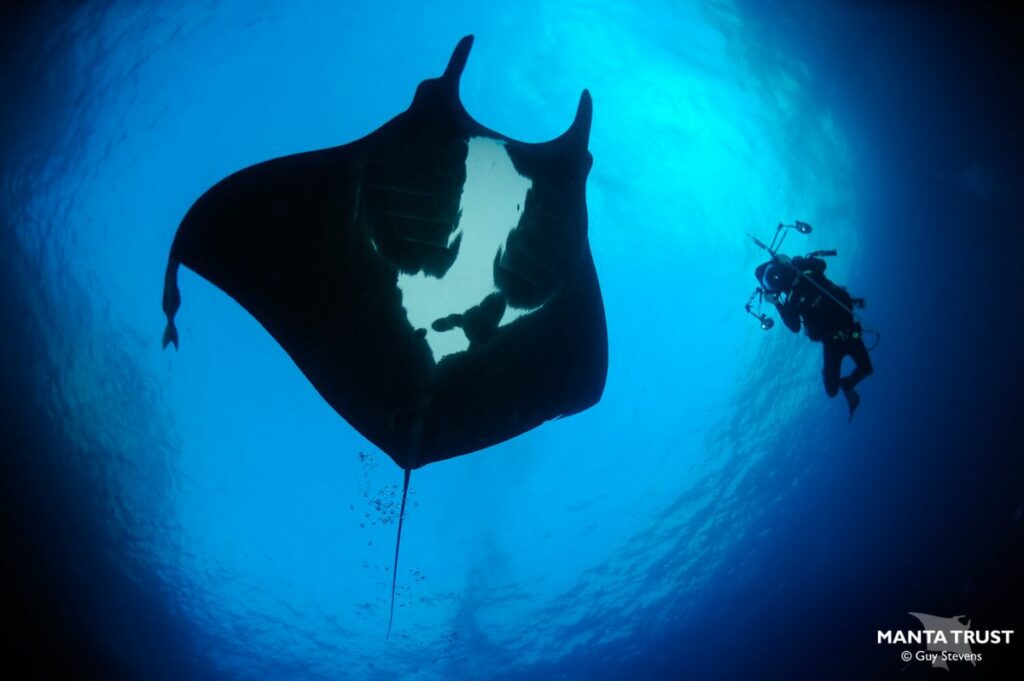
The project report suggested that the relatively low re-sighting rate could indicate that the regional oceanic manta population is considerably larger than the number of individuals documented around Fuvahmulah alone. Estimates of thousands, or even tens of thousands, of animals have been discussed as a possibility, but these figures should not be treated as an established population census.
The true size and distribution of the population remain unknown.
It is possible that Fuvahmulah forms part of a much larger oceanic manta population than currently documented. To understand this better, we need to learn much more about the mantas’ depth preferences, movements and behaviour beyond the depths routinely explored by recreational divers.
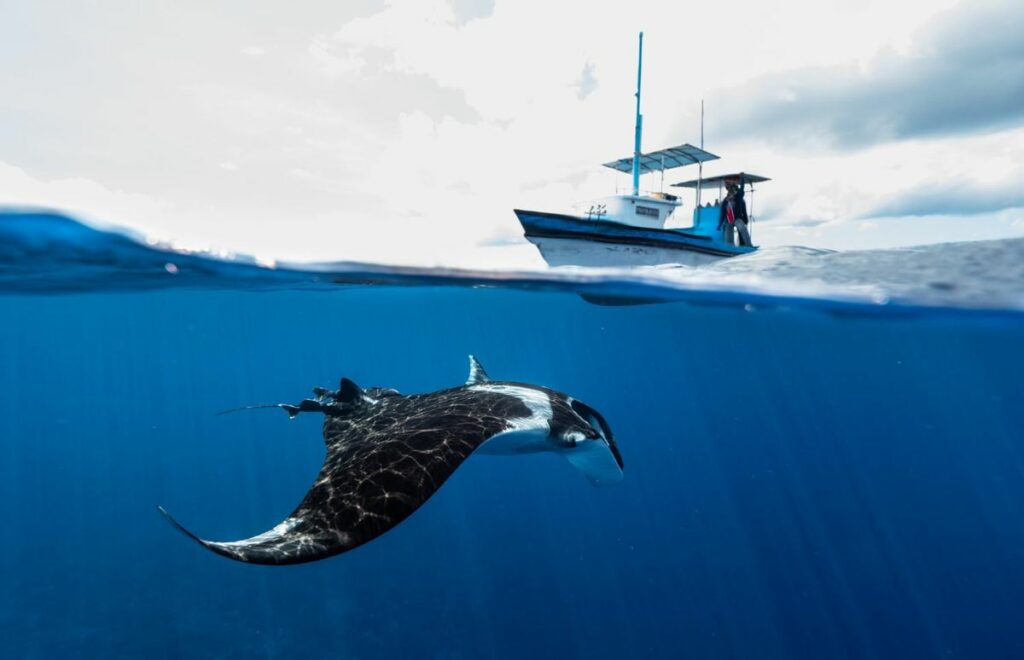
Scientific studies of oceanic mantas suggest that significant numbers of animals may remain below the depths normally accessible to recreational diving. There could therefore be many more mantas within and around the Fuvahmulah aggregation than we currently know about—moving along the deep oceanic walls of Fuvahmulah’s enormous volcanic seamount, where currents and nutrient-rich waters may create conditions that concentrate prey and trigger spectacular feeding activity.
Fuvahmulah itself is extraordinary. The island sits on top of a massive underwater volcanic structure, with a coral island forming at its summit. Fuvahmulah sits on top of a completely dead (extinct) volcano.
It is the only naturally formed volcanic island in the Maldives, and its unique geological setting creates an equally distinctive marine environment. Yet even with surface observations, recreational diving and technical diving, we have explored only a fraction of this extraordinary underwater ecosystem.
Much of Fuvahmulah’s deep volcanic slopes, oceanic walls and pelagic habitat remains largely unexplored.
That unexplored world could hold important clues about the true scale of Fuvahmulah’s oceanic manta aggregation—and perhaps about a much larger population moving through the wider region.
For conservationists, marine biologists and scientists, this makes Fuvahmulah not only a remarkable place to encounter oceanic mantas, but also a potentially important natural laboratory for understanding these magnificent animals and the deep-ocean ecosystem they inhabit.
Conclusion: Fuvahmulah’s Mantas and the Mystery Beyond the Reef
Fuvahmulah’s oceanic mantas represent something far more valuable than another item on a diver’s bucket list.
They are a living expression of the island’s extraordinary geography and its relationship with the deep Indian Ocean.
Fuvahmulah, ‘Wonderfully Unique’ Manta Season Overview
Peak Season: March to May, when oceanic mantas are regularly encountered around Fuvahmulah.
Absolute Peak: April is often considered the height of the season, with spectacular “manta trains” sometimes observed—several males following a single female during courtship.
Key Behaviours: The seasonal aggregation is associated with courtship and mating activity, cleaning interactions and feeding, influenced by changes in oceanographic conditions and plankton availability.
Importance of Fuvahmulah: Fuvahmulah accounts for approximately 80% to 86% of recorded oceanic manta sightings in the Maldives, highlighting the island’s exceptional importance for these pelagic giants.
What We Know?
We know that the concentration is exceptional. We know that more than 1,000 individual oceanic mantas have been identified in Maldivian waters. We know that most records come from Fuvahmulah. We know that courtship and mating behaviour occurs among oceanic mantas in the Maldives. And we know that the species faces serious threats from fisheries.
What We Dont Know?
But perhaps the most important thing we know is what we do not know.
We do not yet know the full journey of these animals.
For Fuvahmulah, that creates an extraordinary responsibility. The island can protect the mantas while they are here, but their story continues when they disappear into the blue.
Perhaps one day satellite tags, genetic studies and years of photographic identification will reveal that a manta seen courting off Fuvahmulah later travelled hundreds or thousands of kilometres across the Indian Ocean.
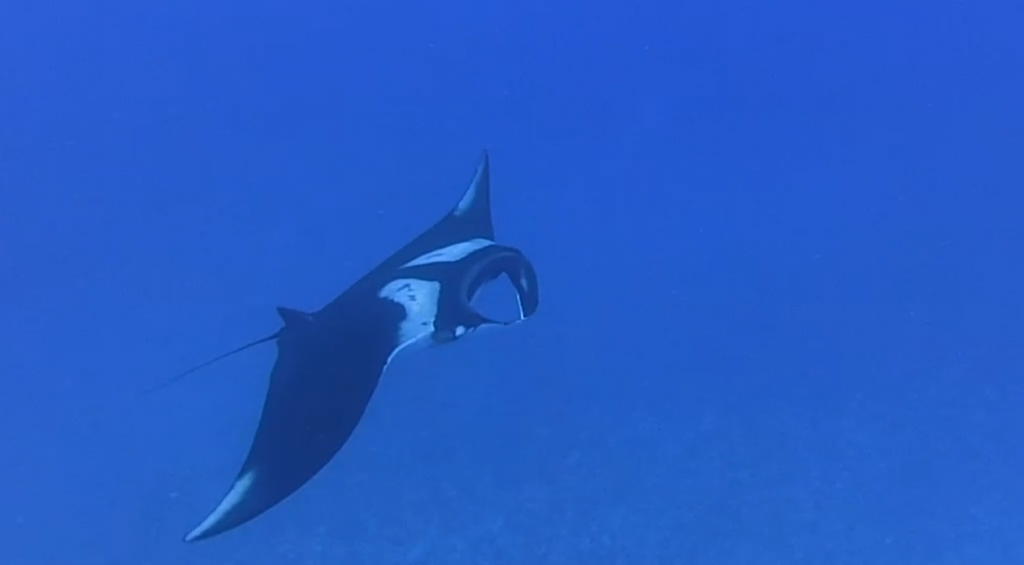
Until then, every oceanic manta that arrives is a reminder that Fuvahmulah is connected to a much larger ocean world.
For visitors, encountering one is an unforgettable experience. For scientists, it is an opportunity.
For Fuvahmulah, it is part of the island’s natural identity. And for the Indian Ocean, these magnificent animals are a reminder that conservation cannot end at the edge of a reef—or at the boundary of a country.
About the Author Shaffaaf
Shaffaaf Naseer is a researcher, environmentalist, green activist, advocate, and travel and tourism consultant from Fuvahmulah, Maldives.
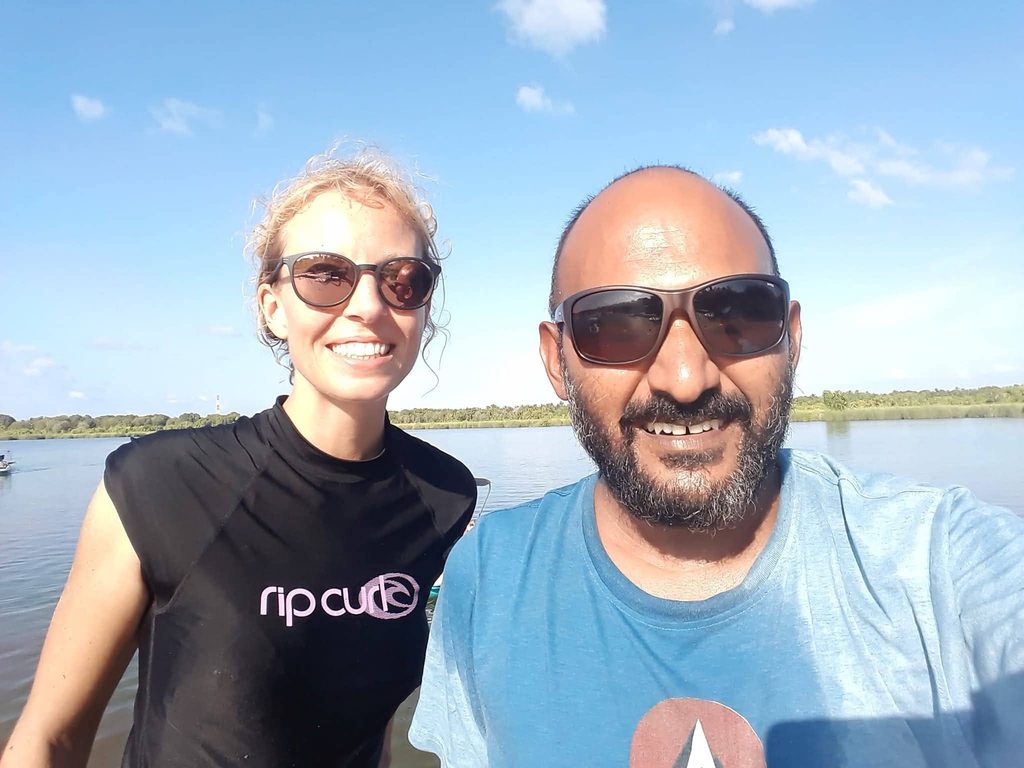
Born and raised on the island, he has spent years championing the protection of Fuvahmulah’s beaches, natural environment, ecology, biodiversity, marine ecosystems, and wider island environment.
As a travel and tourism consultant, Shaffaaf has worked with leading international and Maldivian hospitality brands, including Villa Hotels, Bandos Maldives, One&Only Resorts, W Maldives, Conrad Maldives, Soneva Resorts, Hilton Hotels, and Taj Hotels, among others.
His professional experience is complemented by extensive first-hand knowledge of the Maldivian tourism landscape. He has travelled extensively across the country’s atolls, stayed at more than 50 resorts, and participated in safari cruises during the early development of Maldivian liveaboard tourism.
With a career combining tourism, environmental advocacy, research, and deep first-hand knowledge of the Maldives, Shaffaaf brings a distinctive island-based perspective to travel, tourism, nature, conservation, and sustainable development.
References
International Union for Conservation of Nature. (2022). Mobula birostris (Oceanic manta ray). The IUCN Red List of Threatened Species, 2022, e.T198921A214397182. https://doi.org/10.2305/IUCN.UK.2022-1.RLTS.T198921A214397182.en
Maldives Manta Conservation Programme. (n.d.-a). Mantas & the Maldives. Manta Trust. https://www.maldivesmantaconservation.org/mantas-the-maldives
Maldives Manta Conservation Programme. (n.d.-b). Our approach. Manta Trust. https://www.maldivesmantaconservation.org/our-approach
Maldives Manta Conservation Programme. (n.d.-c). Protected areas. Manta Trust. https://www.maldivesmantaconservation.org/protected-areas
Maldives Manta Conservation Programme. (n.d.-d). Protected species. Manta Trust. https://www.maldivesmantaconservation.org/protected-species
Maldives Manta Conservation Programme. (n.d.-e). RahVeshi Programme. Manta Trust. https://www.maldivesmantaconservation.org/rahveshi-programme
Maldives Manta Conservation Programme. (n.d.-e). RahVeshi Programme. Manta Trust. https://www.maldivesmantaconservation.org/rahveshi-programme
Manta Trust. (n.d.). 1,000th oceanic manta ray identified in the Maldives. https://www.mantatrust.org/1000th-oceanic-manta-ray-maldives
Manta Trust. (n.d.). Mobula birostris. https://www.mantatrust.org/mobula-birostris
Nicholson-Jack, A. E., Harris, J. L., Ballard, K., Turner, K. M. E., & Stevens, G. M. W. (2021). A hitchhiker guide to manta rays: Patterns of association between Mobula alfredi, M. birostris, their symbionts, and other fishes in the Maldives. PLOS ONE, 16(7), e0253704. https://doi.org/10.1371/journal.pone.0253704
Stevens, G. M. W., Hawkins, J. P., & Roberts, C. M. (2018). Courtship and mating behaviour of manta rays Mobula alfredi and M. birostris in the Maldives. Journal of Fish Biology, 93(2), 344–359. https://doi.org/10.1111/jfb.13768
UNESCO. (n.d.). Fuvahmulah. Man and the Biosphere Programme. https://www.unesco.org/en/mab/fuvahmulah
Fernando, D., Stewart, J. D., R. et al. (2021). Mobulid ray catches in Sri Lankan fisheries. [Peer-reviewed fisheries study]. https://pmc.ncbi.nlm.nih.gov/articles/PMC8434810/
What is an oceanic manta ray?
The oceanic manta ray, Mobula birostris, is the world’s largest manta ray species. It is a highly pelagic animal associated with open-ocean environments and is capable of travelling across enormous areas of the world’s tropical and subtropical oceans.
What makes Fuvahmulah an exceptional place for oceanic manta encounters?
The most extraordinary fact is the concentration of sightings. Oceanic mantas are sighted and observed regularly in the Maldives mainly in the southern atolls, and a speciality of Wonderfully Unique Experience of Fuvahmulah. And the overwhelming majority of recorded sightings in a major peer-reviewed study came from Fuvahmulah.
The Maldives Manta Conservation Programme describes Fuvahmulah as the principal Maldivian location for recurring oceanic manta encounters.
Leave a Reply